
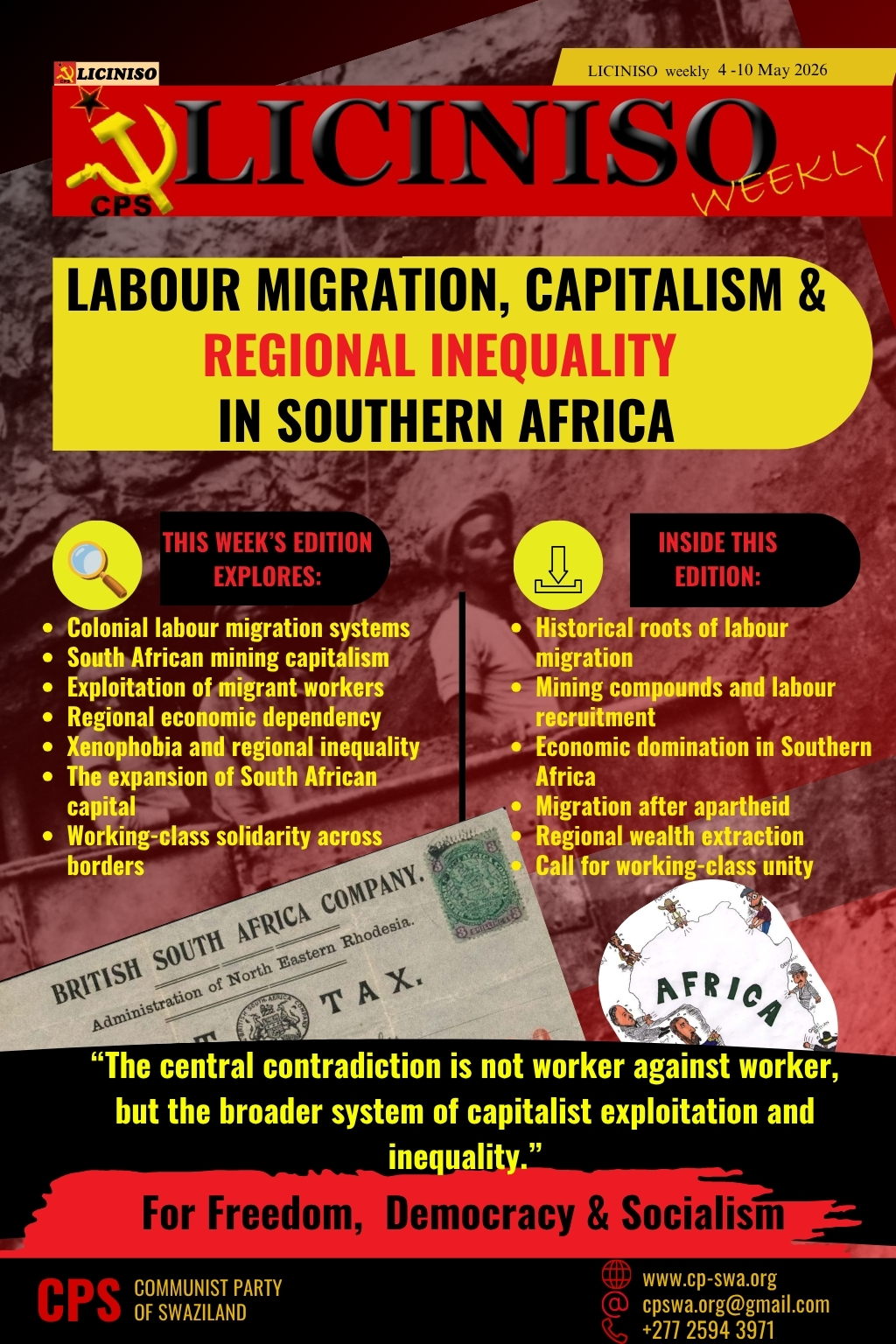
This edition of LICINISO examines the historical and structural roots of African labour migration into South Africa. The publication traces how colonialism, land dispossession, taxation systems, and capitalist expansion transformed neighbouring countries into labour reserves for the South African mining economy.
The article explores the development of migrant labour systems across Southern Africa, the role played by mining corporations and colonial administrations, and the continued regional inequalities created through colonial capitalism.
The publication further examines the social, political, and economic effects of labour migration, including exploitation of workers, dependence on remittances, regional underdevelopment, xenophobia, and the dominance of South African capital across neighbouring countries.
LICINISO also highlights the importance of working-class solidarity, political education, and regional mobilisation against capitalist exploitation, inequality, and repression throughout Southern Africa.
This edition contains an abridged presentation by Mhlonishwa Mtsetfwa, a Communist Party of Swaziland Central Committee member, delivered on 7 May 2026.
Contact:
Thokozane Kunene
General Secretary
(+27)72 594 397
Pius Vilakati
CPS International Secretary
(+27)81 353 3383

