
On September 25, 2025.
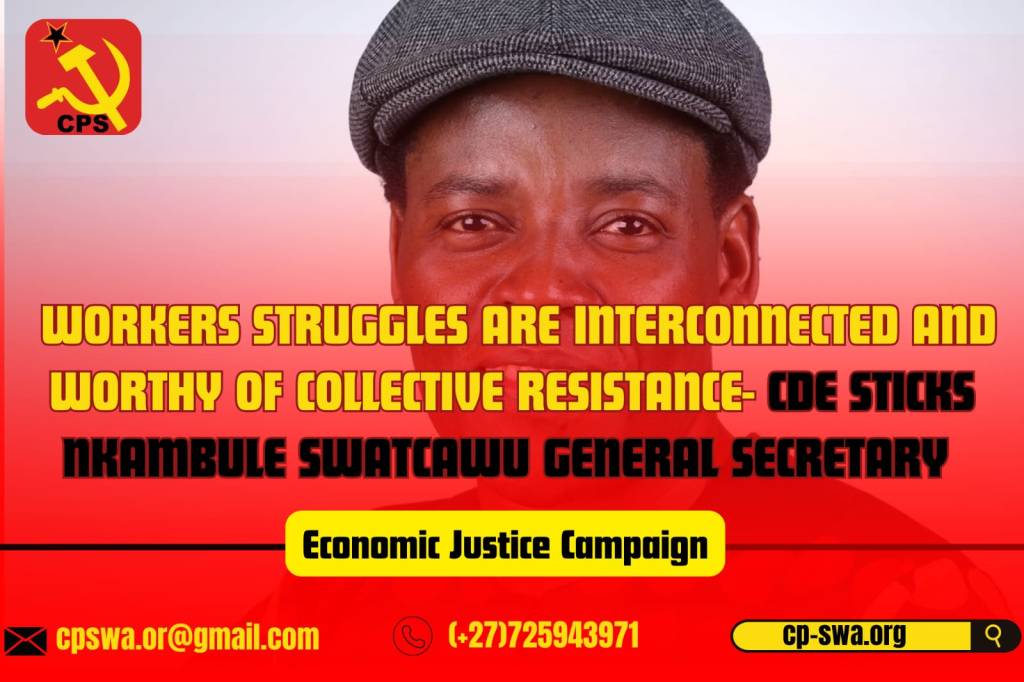
A zoom discussion held under the auspices of the Swaziland Transportation Communication and Allied Workers Union (SWATCAWU), led by General Secretary Comrade Sticks Nkambule. The session focused on the pressing challenges faced by workers in Swaziland, including harsh living conditions, rampant exploitation, and a decade-long stagnation in salary reviews.
The meeting commenced with an acknowledgment of the dire circumstances confronting workers. Comrade Sticks emphasized the need to transform the victimization and intimidation experienced by workers into a rallying point for collective action. Drawing inspiration from the legacy of Steve Biko, he urged participants to embrace hope and solidarity as they navigate the ongoing struggles within Swaziland’s trade union movement. The discussion aimed to inspire a renewed sense of purpose among workers, reinforcing the idea that their struggles are interconnected and worthy of collective resistance.
Central to the meeting was the vision of a progressive trade union movement in Swaziland. Comrade Sticks outlined the foundational characteristics of such a movement, which must be anchored in the lived experiences of workers. This progressive framework should include a toolkit for advancing workers’ rights and promoting worker-controlled leadership. The movement must not only address workplace issues but also engage with broader social concerns, serving as a vehicle for transformative change. Sticks highlighted the necessity of solidarity with other progressive formations, emphasizing that the struggle for workers’ rights is inherently linked to the fight for social and economic justice.
The brutal treatment of transport workers and comrades from the agriculture sector was a focal point in the discussion. Comrade Sticks Nkambule underscored the importance of pursuing justice and democracy amidst a backdrop of state-sponsored victimization. The call for unity resonated throughout the meeting, with participants echoing the need for solidarity among trade unions.
Participants also reinforced this sentiment, highlighting the role of progressive unions in empowering workers and safeguarding their rights. He cautioned against divisive tactics employed by the regime, which seeks to weaken the labor movement through intimidation and misinformation. Participants further articulated the necessity of educating, organizing, and defending workers’ interests in the face of systemic oppression. They pointed out the ongoing negotiations with the government regarding salary reviews and the divide-and-rule tactics that have historically fragmented union efforts. Emphasizing political consciousness, they argued that workers must unite to challenge governmental strategies and advocate for their collective interests. The meeting served as a reminder that true solidarity requires vigilance against both external threats and internal divisions.
The conversation turned to the myriad challenges facing trade unions and workers’ movements, including financial constraints and the suppression of political dissent. Participants recognized that the infiltration of political parties has weakened union capabilities, hampering their ability to organize effectively and advocate for workers’ rights. The need for well-capacitated leaders and a strong, ideologically guided federation was underscored as essential for advancing the revolutionary agenda. Trade unions must reclaim their role as agents of change, actively participating in the struggle for a new socialist order.
The dialogue emphasized the historical resilience of workers who have triumphed over adversity through collective action. However, there was a cautionary note regarding internal divisions caused by leadership that may compromise the movement’s integrity. The role of Marxism as a tool for social change was discussed, with an emphasis on exposing leaders who may act against workers’ interests. The call for strengthening internal unity resonated strongly, as participants recognized the need to prepare for potential challenges from external adversaries.
As the meeting concluded, the participants reaffirmed their commitment to building a robust trade union movement that embodies the principles of solidarity, resilience, and collective action. Comrade Sticks emphasized the importance of strikes and collective leadership in achieving workers’ aspirations. The discussions highlighted the necessity of worker independence and the need to confront intimidation and co-option within unions. The spirit of unwavering courage and solidarity was palpable.
In the face of ongoing challenges, the vision articulated during this meeting serves as a powerful reminder of the potential for workers’ unity to effect meaningful change. By turning victimization and intimidation into a rallying point, workers in Swaziland can forge a path toward justice and equality. The struggle for workers’ rights is not just a local issue; it is a vital part of the global fight for socialism and human dignity. Together, united in purpose and action, the working class can reclaim their rights and build a better future for all.
#EconomicJustice #NDR #CPS #ReleaseBongo #ReleaseAllPoliticalPrisoners
CPS Press
 Communist Party of Swaziland